AI Training
Some of this is real. The work is knowing which parts.
Practical training for people who have to use these tools at work — what they genuinely do, where they will quietly embarrass you, and when the honest answer is not to bother.
I have been told before that everything was about to change
I grew up with a small black and white television and an aerial antenna on the roof. When the color set arrived, two men came with it. One knelt in front of the screen turning a large ring magnet an inch or two off the glass, working the colors into line, while the other made adjustments at the back — in our living room. A few years after that my mother bought me a Mickey Mouse transistor radio, and nobody could believe how small it was.
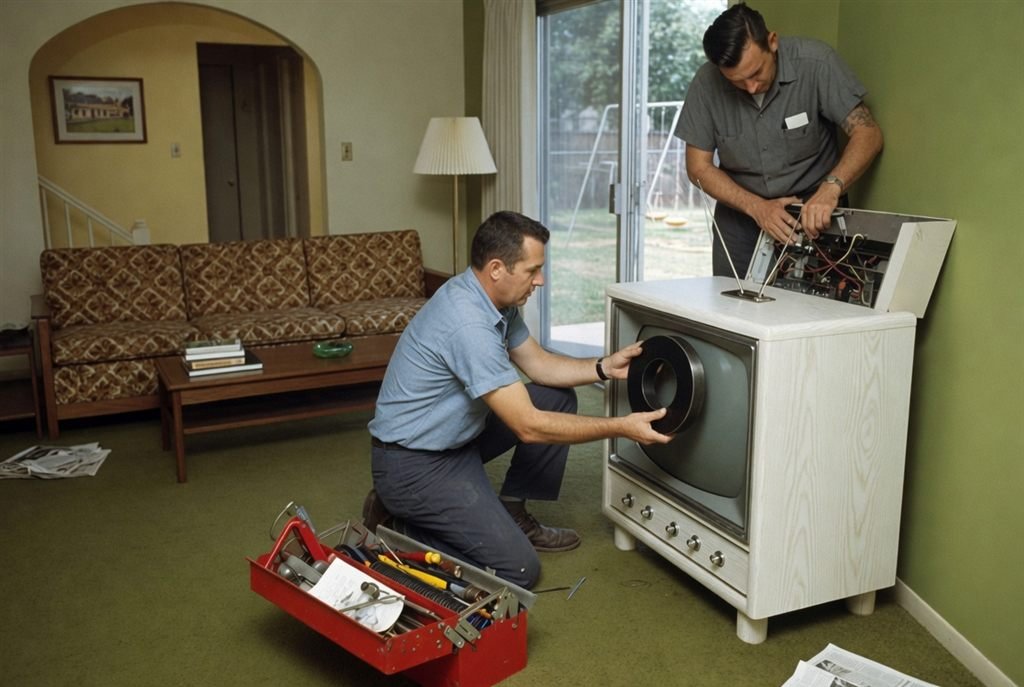
Stone Age to Iron Age in seventy years, and it has not slowed down. It does not move in a straight line either. It moves the other way, the way that catches people out.
I say all that for one reason. Plenty of people will tell you they are skeptical about artificial intelligence, and from somebody young that is just an opinion with its arms folded. I have been in this industry since 1978. I have watched a long procession of things arrive that were going to change everything, and I can tell you which ones actually did.
This one is on the list. That is exactly why it is worth being careful about.
What it is genuinely good at
Notice what these have in common: in every one of them, you already know enough to spot a wrong answer.
The first draft
Of the letter, the policy, the job posting, the awkward email. Starting is the expensive part of writing, and it will hand you something to react to in fifteen seconds. What it gives you is rarely what you send. It is what stops you staring at an empty page for half an hour.
Making long things shorter
A forty-page report you have to speak about on Thursday. An hour of meeting nobody took notes in. It is good at this, and it is a genuine hour back, provided you remember that a summary of something you have not read is something you still have not read.
Translating between languages that are both English
A vendor’s technical proposal into something a board can vote on. A board’s decision into something staff can act on. This is quietly one of the most useful things it does, and almost nobody thinks to ask it.
Being the second pair of eyes
What have I forgotten. What will somebody object to. What is unclear in this paragraph. Small organizations rarely have anybody to ask, and this is a reasonable stand-in for the colleague down the hall you do not have.
It does not know when it is wrong
This is the whole of it. Everything else is detail.
When one of these tools gives you a bad answer, it is not lying to you. Lying requires knowing the truth and choosing otherwise. It produces something shaped like the right answer, and it has no way of telling the difference between that and the right answer itself — which means the wrong ones arrive in exactly the same confident tone as the good ones. There is no tell. No hesitation, no hedging, nothing in the wording to warn you.
And it is worst precisely where you are least equipped to catch it: dates, figures, regulations, citations, anything specific about your own organization. The places it is most useful are the places you could already have written it yourself, slower.
So the rule I teach is short. Use it where you would notice a mistake. Check it where you would not. Everything else is commentary on those two sentences.
What the training actually is
Not a seminar, and not a slide deck about the future. A couple of hours with the people who would actually be using it, working on the real thing that is on their desk this week.
Most of that time goes on two things. The first is how to ask — people give these tools a sentence and get a sentence back, when what works is telling it who you are, who it is writing for, and what a good answer would look like. The difference between those two habits is most of the difference between people who find it useful and people who tried it once and concluded it was nonsense.
The second is how to catch it out, which is the part nobody else teaches and the part that matters. By the end I want your staff slightly suspicious of it, in the specific way that makes it safe to use.
There is also, usually, a short and unglamorous conversation about what should never be typed into one of these in the first place. Client names, case details, anything about a donor, anything you would not read aloud. That side of it is here.
A word to nonprofits in particular
This is the sector where these tools have the most obvious use, because the work is so much writing. Grant applications, donor letters, board papers, annual reports, the same case for support told eleven different ways to eleven different funders. If anything was built for a first draft, it is that.
One caution, and it is not a technical one. Funders are reading a great deal of this now, and they have become quick at recognizing it. Writing that has been produced rather than written has a particular smoothness to it, and it reads as though nobody was especially moved by the thing they are asking for money for.
Your advantage over every other application on that desk is that you are the one who actually knows what happens in the room. Let the machine handle the structure and the tedious parts. Keep the sentences that only you could have written.
And when it is not worth it
Sometimes there is nothing here for you yet. If your people do not write much, or the work is hands-on, or the only tasks that would benefit take four minutes a week, then the honest recommendation is to leave it alone and spend the afternoon on something that is actually costing you.
I will tell you that, in the same way I will tell you your seven-year-old computer has four good years left in it. This is one more technology, it does some things well, and it is not a reason to reorganize a working organization around it.