
People ask me more and more these days how I feel about Microsoft — and honestly, it’s a bit like being asked how I feel about the weather. Everyone has an opinion, and nobody agrees.
Tech companies have become their own little political ecosystems. You’ll hear, “Microsoft does this!” followed immediately by, “No, Google does that!” and then someone in the back yelling about Apple. It’s comical if you step back far enough.
Growing Up With Machines
My journey started on a TI‑80, then a Commodore 64, and eventually the beloved Amiga. When I was in the military, the Amiga era came to an abrupt end, and many of us bought Apple IIGS machines through Apple’s military program.
Six months later, Apple dropped the Macintosh and quietly shoved the IIGS into the retirement home. That was my first real taste of “planned obsolescence,” and it pushed a lot of us toward the PC world.
I already knew my way around Unix and DOS, so sticking with PCs felt natural. And for the most part, I’ve stayed there ever since.
About a year and a half ago, though, I set up my laptop to dual‑boot Windows 11 and Ubuntu — and that opened a new chapter.
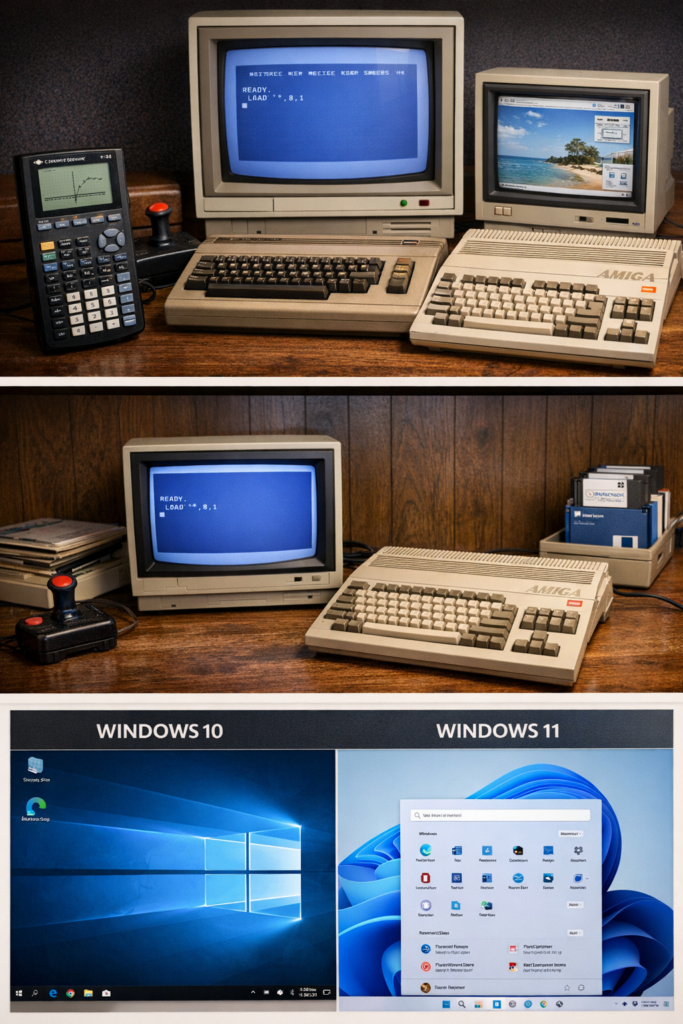
Windows 11: Good, But Not Windows 10
I like Windows 11. I really do. But I liked Windows 10 better.
If you’ve been around long enough, you know the pattern: every other version of Windows tends to be… let’s say “memorable.” For some people, the low point was Windows ME. For me (and many others), it was Windows 8.
Windows 11 feels like Microsoft’s attempt to harden the OS and make security the star of the show. And honestly, I think the next version of Windows will benefit from all this groundwork.
Working with Windows 11 devices every day, the biggest pain point I see in the enterprise is Defender XDR. If your machine doesn’t have enough resources, you’re going to feel it — and you’re not going to be happy about it. Microsoft knows this, and they’re working on it, but right now it’s a real bottleneck.
Meanwhile, Over in Ubuntu Land…
I’ve been running Ubuntu alongside Windows, and I’m really enjoying it. The only major gap is Microsoft Office. And at this point, I think it’s time for Microsoft to finally give Linux users a proper Office experience.
There’s a whole world of people who’ve either always lived in Linux or have left Microsoft and Apple behind to escape the corporate ecosystem. Ironically, Linux distributions are becoming more corporate themselves — but that’s a topic for another day.
Just My Opinion
That’s all this is — one person’s view after decades of living through every twist and turn of the personal computing world. Microsoft isn’t perfect, but neither is any tech giant. They all evolve, stumble, reinvent, and repeat.
And we keep using them anyway.